The 3-Page Funnel Every Nigerian Coach Needs in 2026 to Book Clients on Autopilot
Imagine you’re a Nigerian business coach with four years of experience, a glowing Instagram page, and a WhatsApp inbox full of people who said, “I’m interested.” Three weeks later, most of them have gone quiet. No payment. No follow-up. Just silence.
Sound familiar?
The truth is, interest without a system is just noise.
Coaches are losing clients every day, not because their offer is bad, but because there is no clear, automated path guiding a prospect from “I saw your post” to “I’ve booked my session.”
That path is called a sales funnel. And in 2026, you don’t need a 20-page website or a complicated tech stack to book clients consistently. You need these exact three pages.
This guide breaks down the 3-page funnel every Nigerian coach needs in 2026, how to build it, what goes on each page, and how to drive the right traffic into it, so your calendar books itself.
What Is A 3-Page Funnel
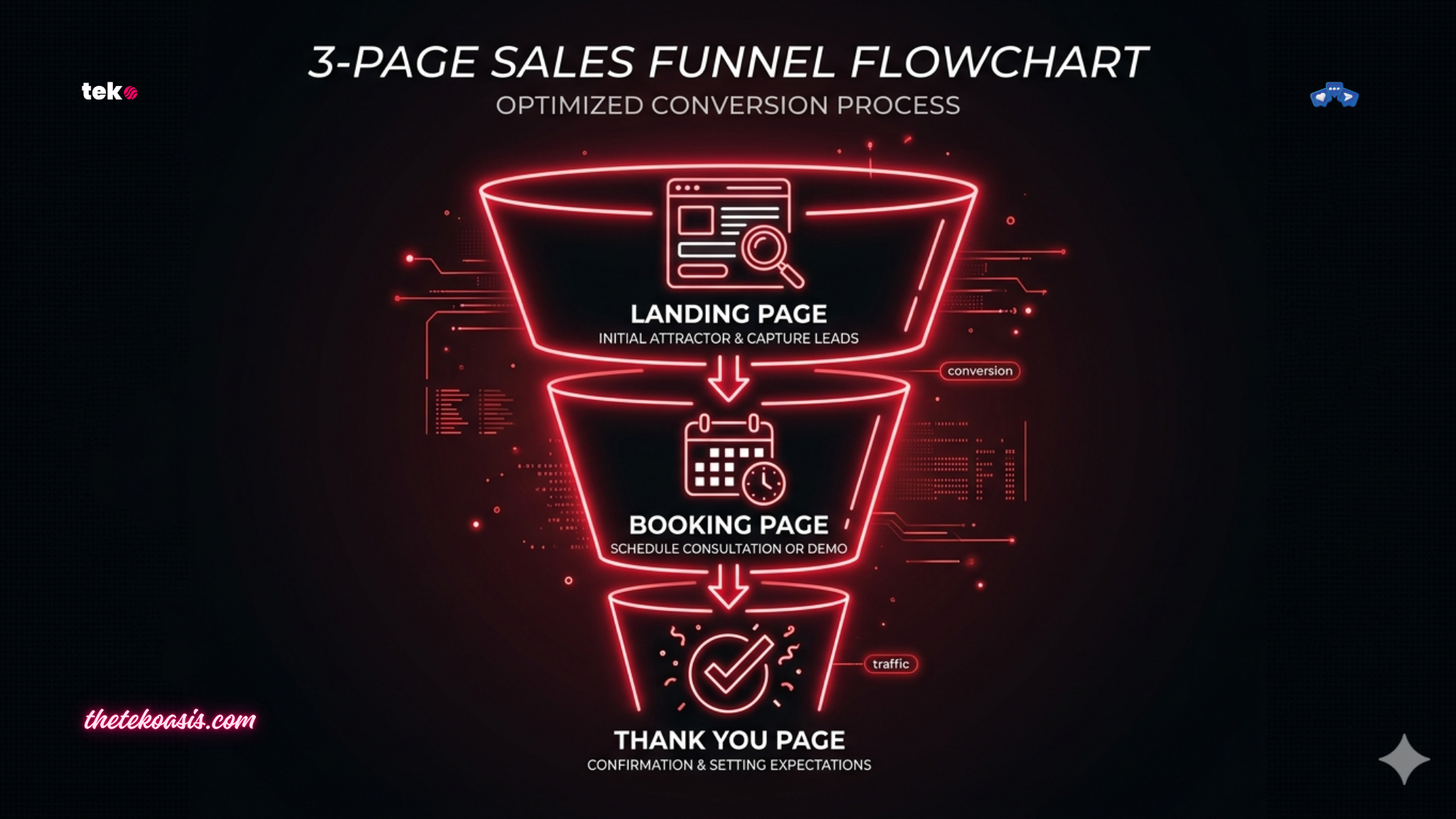
A 3-page funnel is a stripped-down, conversion-focused sales system that moves a potential client through three strategic web pages, from first impression to confirmed booking, without any manual follow-up from you.
Unlike a full website with navigation bars, about pages, and service menus competing for attention, a funnel has one job: book clients.
Every element on every page pushes the visitor toward a single action.
The three pages are:
- Page 1- The Landing Page: Where you capture attention, establish credibility, and make the offer
- Page 2 – The Application or Booking Page: Where qualified leads commit by filling a form or scheduling a call
- Page 3 – The Thank You Page: Where you confirm the booking, set expectations, and keep momentum going
Think of it as a digital sales assistant that works around the clock, qualifying leads, handling objections through your copy, and placing confirmed bookings on your calendar while you sleep.
Why Every Nigerian Coach Needs This Funnel in 2026
The Nigerian digital market has changed significantly.
With over 107 million Nigerians now online and 98.2% using social media to research products and services before buying, your potential clients are not impulsive buyers.
They are researching, comparing, and vetting coaches before committing a single naira.
The coaches winning in this environment are not necessarily the most talented.
They are the ones with the clearest, most trustworthy path to purchase.
When you don’t have a funnel, a few things happen:
- Leads fall through the cracks because there is no automated follow-up
- Prospects sense disorganization and lose confidence in your professionalism
- You spend hours doing the work that a system should be doing for free
- You can’t scale because everything depends on your personal availability
A properly designed funnel solves all of this.
It automates lead generation, builds trust through strategic content, and filters out unqualified prospects before they reach your calendar, so every call you take is with someone who is already warm, interested, and financially ready.
The 3-Page Funnel Every Nigerian Coach Needs in 2026: A Page-by-Page Breakdown
Each of the three pages has a distinct function and a specific structure. Getting one wrong affects the entire system. Here is exactly what goes on each page and why.
Page 1: The Landing Page
Your landing page is the entry point of your funnel.
It is where traffic from Instagram, LinkedIn, Google, or paid ads lands first.
Its only job is to convert a visitor’s curiosity into a confirmed click on your call-to-action button.
The biggest mistake most coaches make with landing pages is treating them like a homepage, cramming in every service, adding navigation links, and trying to explain everything.
A landing page has no navigation. There is nowhere to go except forward.
Here is the structure that converts:
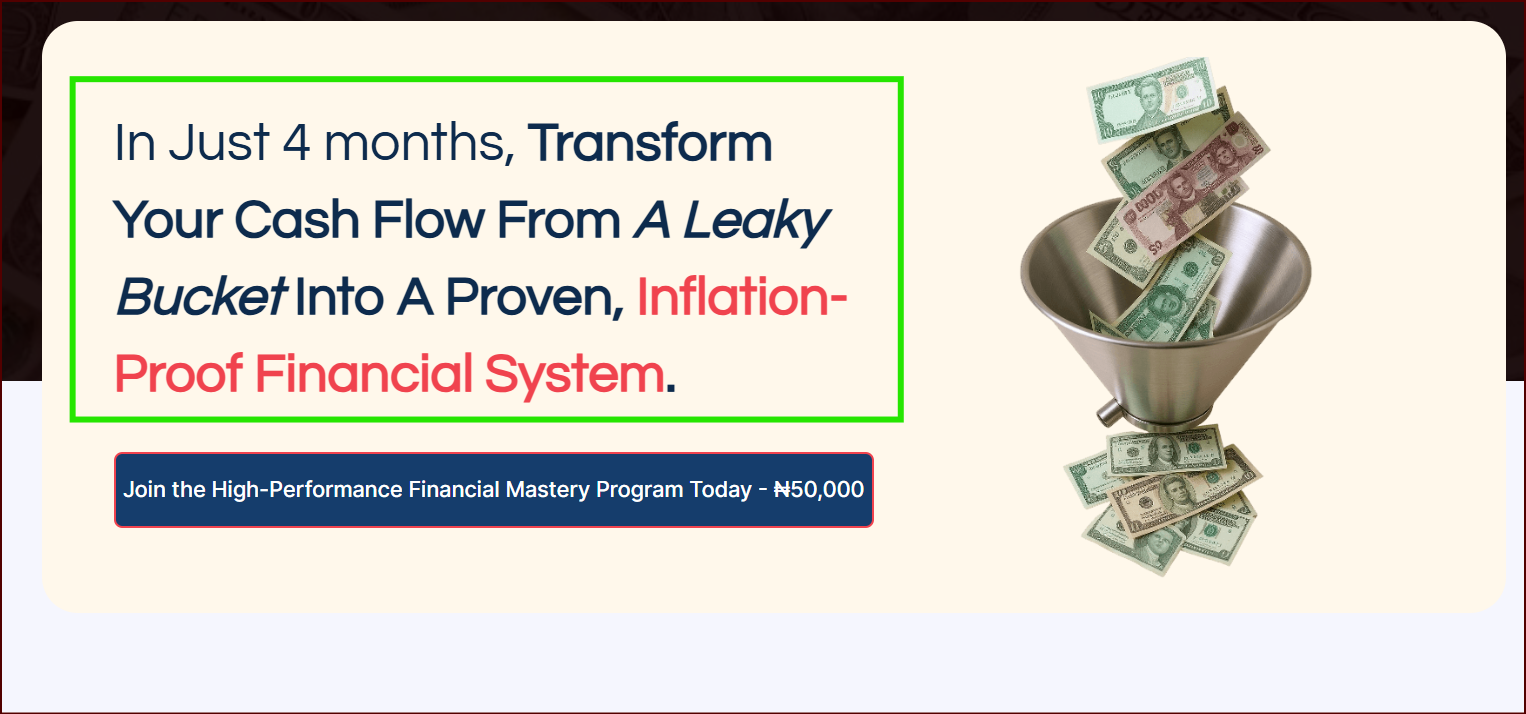
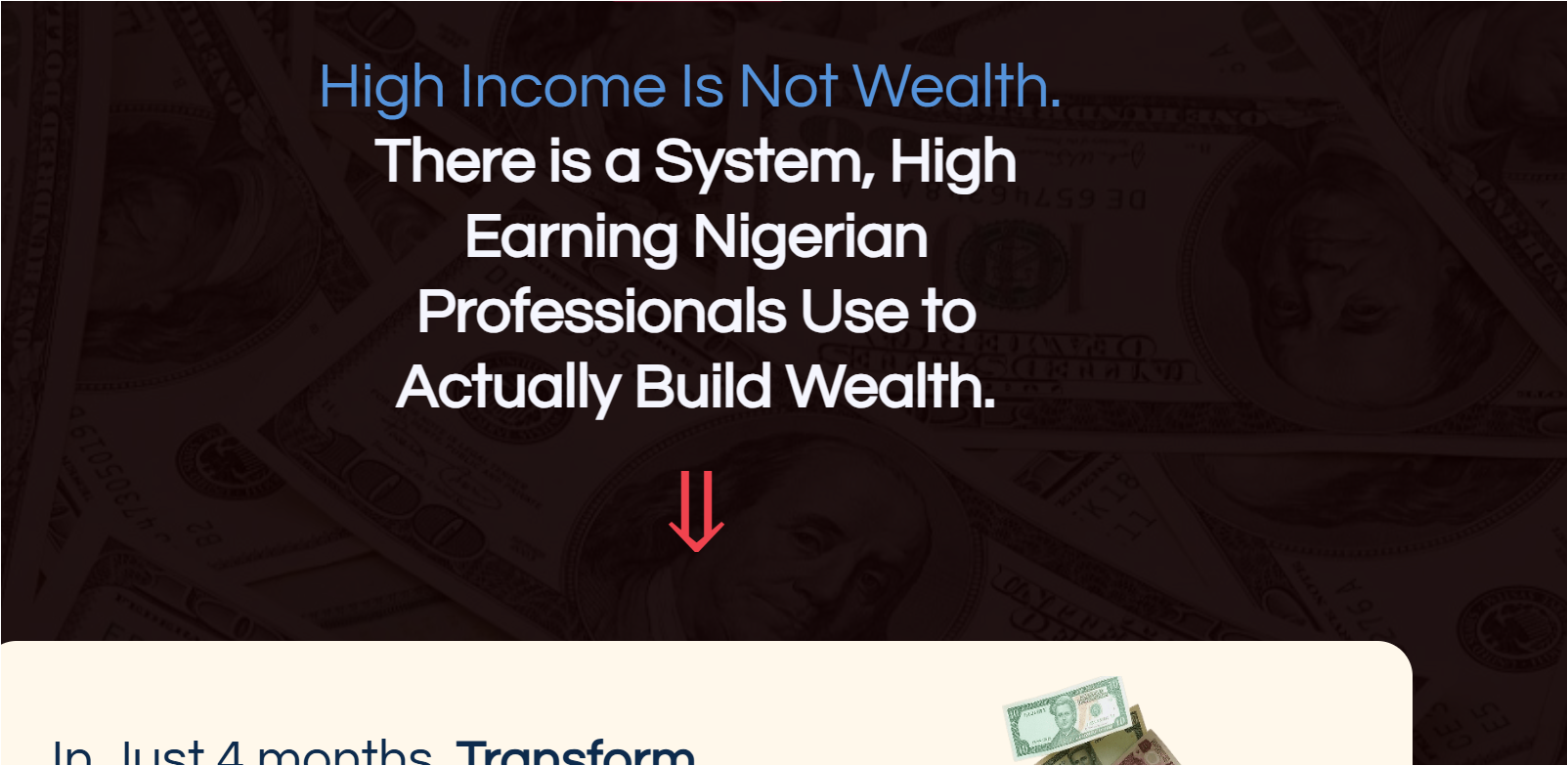
- A Headline That Speaks to a Specific Pain Point or Desire
Your headline is the first thing a visitor reads. If it does not immediately reflect their situation, they will leave within seconds. The headline must name either the problem you solve, the result you deliver, or the person you serve.
For example, instead of “Welcome to My Coaching Practice,” try: “Business Owners: Book a Free Strategy Call to Grow Your Revenue by 50% in 90 Days.”
- A Subheadline That Clarifies and Builds Curiosity
The subheadline supports your headline by adding one more layer of context. It should tell the visitor what happens next or what makes your approach different.
For example: “In one 60-minute session, we’ll identify exactly what’s holding your business back and map out a step-by-step plan to fix it.”
- Trust Signals and Social Proof
Consumers carry a high level of earned skepticism. This is not an obstacle; it is a design requirement. Your landing page must include trust signals that a stranger can verify.
These include:
- Video testimonials from past or current clients with real, specific results (e.g., “I grew my business from ₦80,000 to ₦400,000 monthly in three months”)
- Written testimonials with names and photos, where possible
- Screenshots of client wins, WhatsApp messages, or revenue milestones
- Logos of media outlets, podcasts, or organizations you have appeared with, if possible
- Certifications, credentials, and professional memberships
The more specific and verifiable your proof, the stronger your conversion rate.
- A Clear Explanation of Your Process
Uncertainty is a conversion killer. Visitors want to know exactly what happens if they click your button. Walk them through your process in three to five simple steps.
For example:
Step 1: Fill out the short application form (5 minutes)
Step 2: We review your application and confirm your spot
Step 3: You receive a calendar link to book your session
Step 4: We get on a call and build your roadmap together
- A Single, Bold Call-to-Action
One page. One goal. One button. Your CTA should be action-oriented and benefit-driven, not generic.
Instead of: “Submit” Use: “Yes, I Want My Free Strategy Session” or “Book My Spot Now”
Place this button at least twice on the page, near the top and near the bottom, so visitors never have to scroll back up to take action.
- A FAQ Section That Handles Objections
Before someone clicks your CTA, they have questions running through their head. The FAQ section is where you answer those objections proactively so they don’t become reasons not to book.
Common objections to address:
- Is this call really free? What’s the catch?
- Am I the right fit for this coaching?
- What happens after the call?
- How long have you been coaching?
- Do you work with people in my specific industry?
Page 2: The Application or Booking Page
Once a visitor clicks your CTA, they land on Page 2. This is where your funnel does its heaviest lifting, and where most coaches either close the gap between interest and commitment, or lose the lead entirely.
The structure of this page is not one-size-fits-all. It depends directly on what you are selling and what your prospect needs to see before they are ready to pay. Here are the two versions.
Version A: VSL + Form + Payment (for coaching priced ₦500,000 and above)
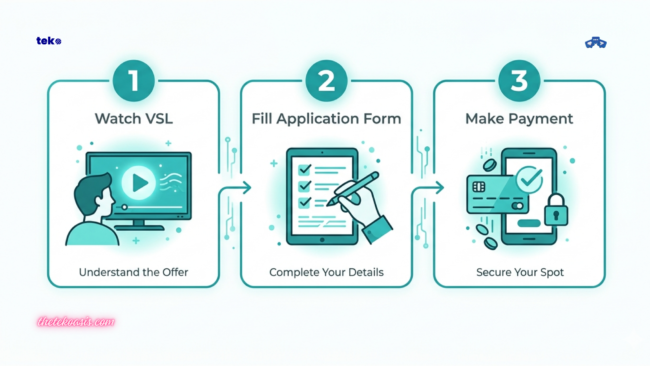
At this price point, your visitor may not be ready to pay upon arrival. They have seen your landing page, they are interested, but high-ticket coaching requires a higher level of trust before someone commits. That trust gap is closed by a Video Sales Letter (VSL).
A VSL is not a promotional video. It is a structured, educational presentation that does three specific jobs: it deepens the visitor’s understanding of their problem, it walks them through your methodology and why it works, and it handles every major objection they are likely to have, all before you ask them to do anything.
By the time a serious prospect finishes watching, they are not just interested. They are informed, convinced, and ready to take the next step.
The VSL on this page should include:
- A clear statement of the problem your ideal client is stuck in, described in their own language
- Your story and why you are the right person to solve this specific problem
- A breakdown of your coaching methodology, what you do, how you do it, and why it works
- Real client testimonials and case study results embedded throughout, not saved for the end
- Answers to the most common objections: cost, timing, and whether it will work for their specific situation
- A clear instruction at the end telling them exactly what to fill out and why
After the VSL, the visitor fills out a short application form. This form is not a quiz. It is a qualifying document that confirms they meet the criteria for your coaching program and that they are financially ready to invest. Keep it between six and eight questions, focused on their situation, their goal, their timeline, and their budget.
Once the form is submitted, they are directed to a payment page to secure their spot or pay a deposit. This is not a free call booking. The VSL handled the education. The form handled the qualification. The payment page closes the commitment.
Pro Tip: Your VSL does not need to be a Hollywood production. A well-lit, clearly recorded video of you speaking directly to your ideal client will outperform a heavily edited production that feels corporate and disconnected. Authenticity is the conversion driver.
Version B: Direct Payment Page (for coaching priced ₦100,000 to ₦400,000)
At this price range, the barrier to purchase is lower, and the decision cycle is shorter. Your visitor does not need a VSL to feel confident. The landing page has already done enough of the trust-building work.
This version skips the form and the video entirely. The visitor clicks your CTA and lands directly on a clean, friction-free payment page. The goal is to make completing the purchase as simple as possible, with no extra steps, no additional information to consume, and no new decisions to make.
Your payment page should use Paystack or Flutterwave for seamless naira transactions, and it should include:
- A one or two sentence restatement of what they are about to get (restate the core promise from the landing page)
- The price is displayed clearly with no hidden conditions
- A summary of what is included in the program
- One or two short testimonials directly above the payment button for final reassurance
- A clear and simple payment button, one option, not multiple confusing tiers
Regardless of which version applies to your offer, Page 2 has one non-negotiable job: it must convert the decision your visitor has already made in their head into a real, committed action. Every element on the page should serve that single purpose and nothing else.
Page 3: The Thank You Page
Most coaches treat the thank you page as an afterthought, a plain “Your booking is confirmed” message. That is a wasted opportunity.
The thank you page is the highest-attention moment in your entire funnel. The visitor just took a significant action. They are engaged, excited, and paying full attention. Use that attention strategically.
Your thank you page should do one of these three things:
- Confirm the Booking With Clarity
State the date, time (in WAT), platform (Zoom, Google Meet, phone call), and what they will receive by email. Ambiguity at this stage creates anxiety and increases no-show rates.
For example: “Your strategy session is confirmed for [date] at [time] WAT. A Zoom link and calendar invite have been sent to [email].”
- Set Expectations and Reduce No-Shows
Tell them exactly what to do before the call. Give them one or two preparation tasks that require a small investment of time. When people invest effort before the call, they show up.
- Deliver Bonus Value
Offer something that deepens their trust and excitement between now and the call. This could be:
- A free resource like a PDF checklist or mini-guide
- A case study of a client who had a similar challenge to theirs
Pro Tip: If you have a low-ticket digital product relevant to your niche, a course, workbook, or template, this is the ideal place to offer it. Someone who just committed to a booking is in a buying mindset. A well-placed ₦5,000 to ₦25,000 offer here can generate significant revenue on top of your coaching income.
How to Build Your 3-Page Funnel: Step-by-Step
Building a funnel does not require advanced technical skills. What it requires is clarity on your offer, well-written copy, and the right tools configured correctly. Here is the exact process to follow.
Step 1: Choose Your Funnel-Building Tools
Before you write a single word or design a single page, decide which platform you will build on. The right choice depends on your technical comfort level and budget.
Your options include:
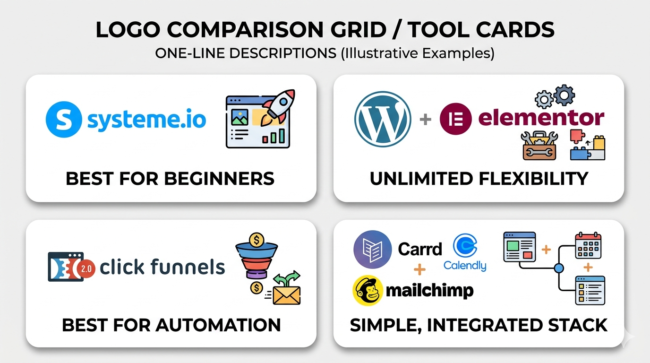
- Systeme.io: Free plan available, beginner-friendly, all-in-one platform with landing pages, email automation, and booking. Ideal for Nigerian coaches starting out
- WordPress + Elementor: More flexibility and full control over design. Requires hosting and domain. Ideal if you already have a WordPress website
- ClickFunnels: Industry-standard funnel builder with strong templates. Higher price point but powerful automation features
- Carrd + Calendly + Mailchimp: The lean, budget-friendly combination. Carrd for the landing page, Calendly for booking, and Mailchimp for email automation
For booking and calendar management, pair any of these platforms with Calendly, TidyCal, or Acuity Scheduling.
Step 2: Write Your Copy First, Then Design
This is where most Nigerian coaches get stuck: they open a design tool and start dragging and dropping elements before they know what the page should say. Design without copy is decoration, not conversion.
Before you touch any builder, write out:
- Your headline and subheadline
- Your value proposition (one to two sentences explaining what you do, for whom, and the result you deliver)
- Your social proof (compile your testimonials)
- Your process steps
- Your FAQ answers
- Your CTA text
- Your thank you page message and preparation instructions
Once your copy is written, the design simply gives it a home.
Step 3: Build and Configure Each Page
With your copy ready and your platform chosen, build each page in order, landing page first, then booking/application, then thank you.
Key technical steps to complete:
- Connect your custom domain to your funnel (e.g., strategy.yourcoachingbrand.com)
- Set up your calendar tool and sync it to your actual working calendar; don’t let it show availability on days you’re unavailable
- Set up form submission notifications, so you receive an email each time someone applies
- Create and connect your email confirmation sequences (more on this below)
- Set the correct time zone on your booking page (WAT)
- Add your Facebook Pixel or Google Analytics tracking code to all three pages so you can measure traffic and conversions
Step 4: Set Up Email Automation
A properly designed funnel automates the repetitive tasks that drain your time. Email automation is the backbone of that system. You need three core sequences:
Sequence 1: Booking Confirmation
Triggered immediately when someone books or submits an application. This sequence includes:
- Email 1 (Immediate): Booking confirmation with date, time, Zoom link, and preparation instructions
- Email 2 (24 hours before): Reminder email with a case study or testimonial to reinforce their decision
- Email 3 (1 hour before): Final reminder with the join link clearly visible
Sequence 2: Nurture Sequence (for landing page opt-ins who haven’t booked yet)
Triggered when someone joins your email list from a lead magnet but hasn’t booked a call. This sequence includes:
- Email 1: Welcome and delivery of the promised resource
- Email 2 (Day 3): A client success story relevant to their challenge
- Email 3 (Day 5): Address the most common objection your ideal client has
- Email 4 (Day 7): Direct invitation to book a strategy call with your booking link
Sequence 3: No-Show Recovery
Triggered when someone misses their scheduled call. This sequence includes:
- Email 1 (Within 1 hour of missed call): Empathetic check-in with a reschedule link
- Email 2 (Next day): A valuable resource + reminder that the slot is available
- Email 3 (3 days later): Final invitation to rebook before the spot goes to someone else
Step 5: Test Every Single Step Before Going Live
Launching a funnel with broken links, forms that don’t submit, or confirmation emails that don’t arrive will cost you real bookings and reputation. Test everything before you send a single person to your landing page.
Your pre-launch checklist:
- Complete the full funnel yourself on both desktop and mobile
- Submit a test application and confirm you receive the notification
- Book a test appointment and confirm the calendar invite arrives correctly
- Check that all confirmation emails are sent and properly formatted
- Verify every link on every page works
- Review all three pages on at least two different phone models
- Ask one other person to go through the funnel and give honest feedback
Common Mistakes Coaches Make With Funnels
Knowing what not to do is just as important as knowing what to do. After years of working with Nigerian business owners, these are the patterns that consistently kill funnel performance.
Mistake 1: Building the Funnel Before Writing the Copy
Design without copy is a beautiful shell with nothing inside. Most Coaches often open Elementor or Canva, pick a colour scheme, and start building, then struggle to fill the pages with words that convert.
Reverse the process. Write first, design second.
Mistake 2: Using Generic, Vague Testimonials
“She’s a wonderful coach, and I really learned a lot” does not convert. Specific, results-driven testimonials do.
Train your clients to give testimonials that include before-and-after context, specific outcomes, and a timeframe.
For example: “Before working with Temi, I was charging ₦30,000 per client and barely breaking even. Three months into the program, I restructured my pricing and signed three clients at ₦250,000 each in one week.”
Mistake 3: Sending Traffic to a Funnel That Hasn’t Been Tested
A single broken form or a missing confirmation email can cost you dozens of bookings before you even realize something is wrong. Always complete the full funnel yourself, on mobile, before driving any traffic to it.
Mistake 4: Treating the Thank You Page as an Afterthought
An appointment booking funnel that ends with a generic confirmation page misses the most high-attention moment in the entire customer journey. Use the thank you page intentionally: set expectations, deliver value, and reduce no-shows.
Mistake 5: Building the Funnel and Then Doing Nothing
This is the most common and most costly mistake. Your funnel cannot generate bookings without traffic. Building the system is 30% of the work. Consistently driving the right people to it is the other 70%.
Content creation, collaborations, and paid promotion are not optional extras. They are the fuel your funnel runs on.
Frequently Asked Questions
What is the 3-page funnel every Nigerian coach needs in 2026?
The 3-page funnel every Nigerian coach needs in 2026 consists of a landing page, an application or booking page, and a thank-you page. Together, these three pages create an automated system that attracts potential coaching clients, qualifies them, books them on your calendar, and sets expectations, all without manual follow-up from you.
How much does it cost to build a 3-page funnel?
Costs vary depending on the tools you use. A basic setup using free tools like Systeme.io (free plan), Google Forms, and Calendly (free plan) costs as little as ₦0 to ₦15,000 for a custom domain.
A mid-tier setup with WordPress, Elementor Pro, and email automation tools runs between ₦80,000 and ₦200,000. A professionally built and copywritten funnel can range from ₦250,000 to ₦600,000 or more, depending on the agency or freelancer.
How long does it take to build a 3-page funnel?
With clear copy and a chosen platform, most coaches can build a functional 3-page funnel in three to five days. If you’re hiring a professional, expect one to two weeks from briefing to launch.
Do I need a large social media following to make the funnel work?
No. What matters is the quality and relevance of your audience, not the size. A coach with 100 highly engaged, niche-specific followers will consistently outperform a coach with 50,000 generic followers. Focus on attracting the right people, not more people.
Should I offer free or paid discovery calls?
There’s no one-size-fit- all approach because you are qualifying and selling on the call itself. You can consider charging a small application fee of ₦10,000 to ₦25,000 that gets credited toward the program if they join. This eliminates time-wasters without deterring serious prospects.
What tools should Nigerian coaches use to build their funnel?
The most practical options for Nigerian coaches are Systeme.io (free and all-in-one), WordPress with Elementor (flexible and powerful), Calendly for booking integration, and Mailchimp or MailerLite for email automation. For payment links, Nigerian coaches can use Paystack, selar or Flutterwave.
What is a good conversion rate for a coaching funnel?
A healthy landing page to booking conversion rate for a coaching funnel is between 5% and 15%. Booking to paid client conversion rates of 30% to 50% are achievable with strong qualification questions, a well-structured sales call, and a clear offer.
How do I reduce no-shows on my booked strategy calls?
Send at least three reminder emails: one immediately after booking, one 24 hours before the call, and one one hour before. Give the prospect preparation tasks that require effort, people who invest time before a call are far more likely to show up. Some coaches also add an SMS reminder for an additional touchpoint.
Need help building a high-converting 3-page funnel for your coaching business?
At Tekoasis, we build done-for-you marketing systems for business owners ready to stop chasing clients and start booking them automatically. Get in touch with us today, and let’s build your client acquisition machine.